
Corporate
Americas
United States & Canada
México
America Latina
Brasil
Oceania
Australia
New Zealand
Europe
Asia
India
Indonesia
Malaysia
Philippines
Singapore
Thailand
Vietnam
日本
中国
대한민국
台湾
Other Countries
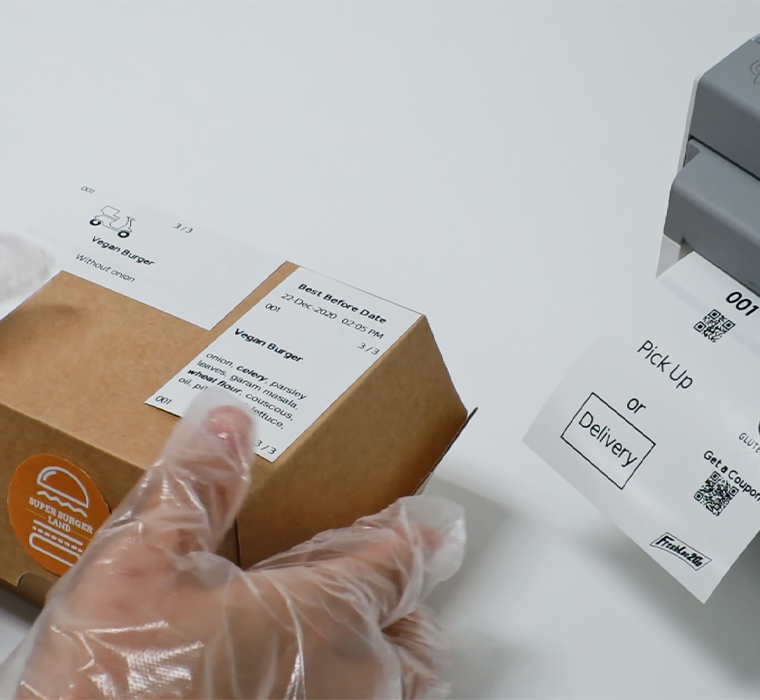
Prevents loss of multiple labels issued at once
Space-saving label issuance
Liner-less for improved workability
Challenges
Labels need to be changed for each product, which is time-consuming
Handling liner paper is cumbersome and results in poor work efficiency
Printing may be cut off in the middle depending on the amount of printed content
The work area is too small, making it difficult to operate efficiently

Liner-less variable-length cutting streamlines label issuance and pasting
Benefits
One printer for a variety of label issues
A single printer can be used to issue a variety of labels required in the field. It is possible to print raw material labels, order slips, tamper-evident labels, etc. all at once. By unifying operations related to label issuance, it contributes to the improvement of on-site operations, such as preventing the use of human resources and reducing the man-hours required to manage equipment.
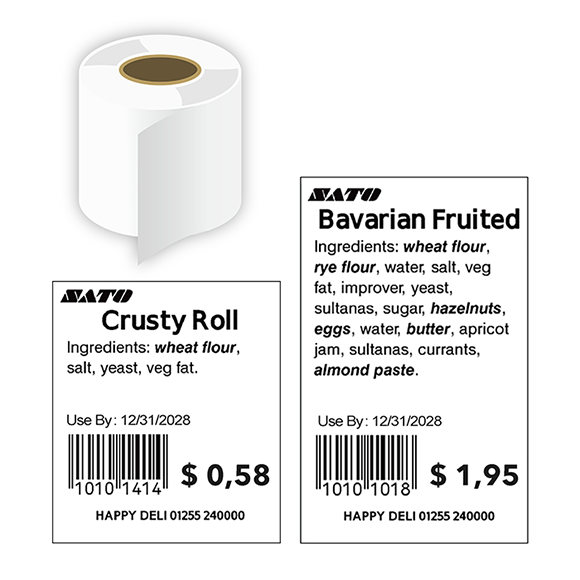
Adjust label length according to printing content
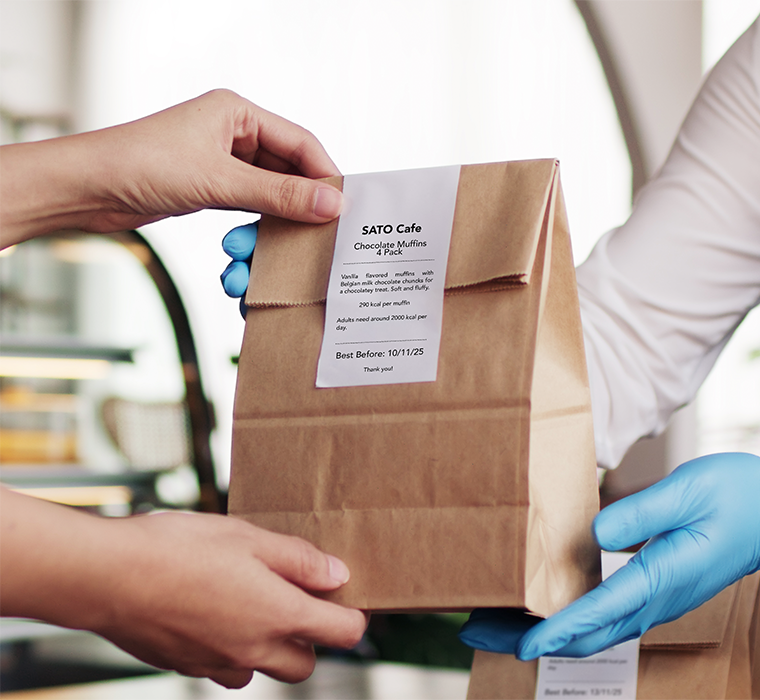
Labels can be issued without waste according to the content of food labels, etc. Labels can be cut to length according to the number of characters, enabling efficient label issuance with minimal margins. There is also no need to worry about printing loss due to forgetting to replace labels.
Can be lined to match the container
When price, best-before and best-consumption dates are separately affixed to the front of a product and raw materials are separately affixed to the back of the product, the label can be automatically cut into two pieces and issued.
Liner-less labels eliminate the hassle of mounting paper
The linerless design eliminates the need to remove labels and reduces the risk of label damage. As a result, the label application process proceeds smoothly. It also contributes to the reduction of CO2 emissions by reducing the amount of wood used as raw material and eliminating the need for incineration.
Related Solutions
SATO support starts here
Need specifics on products or pricing?
Connect with our technical experts for fast, reliable support.