Farmington Community Library Director Beverly Papai obviously sees technology as opening new opportunities and not something to fear. Not only does she use it for the operation side of library management, but for a library's core business: providing information. The increase in the library's circulation, she says, isn't due just to a growing, educated population and a new facility. It's also due to the information technology Farmington Hills offers.
The Farmington Community Library system isn't your grandfather's library.
Dark, dinghy, stuffy went out long ago in libraries, but Farmington Community Library offers much more than well-lit facilities, including videos and CDs along with reference books and paperbacks.
It has borrowed operations and material handling ideas, as well as technologies, from industry to improve the service it offers customers and to keep its costs down.
Beverly Papai, director of the public library in Farmington Hills, MI., reasoned that if industry could gain tremendous material handling efficiencies from new technologies, libraries should be able to do the same.
Located in the growing Detroit suburb of Farmington Hills, the library faces both a physically expanding situation and an increasing circulation, all without a comparative increase in staffing funds. Library circulation will top 1 million by June, Papai predicts, and will continue growing.
"We're fortunate to live in a community with a higher-thanaverage norm education level," says Papai.
Farmington Hills has a substantial number of professional/managerial and sales/technical workers. Ninety percent of its high school students go onto higher education. On top of that, the library serves close to 4,000 businesses without corporate libraries.
Eyeing all this, Papai says, "I know my public demand will substantially increase, possibly 25% to 50%, however, I will most likely not realize an equivalent increase in my staffing budget."
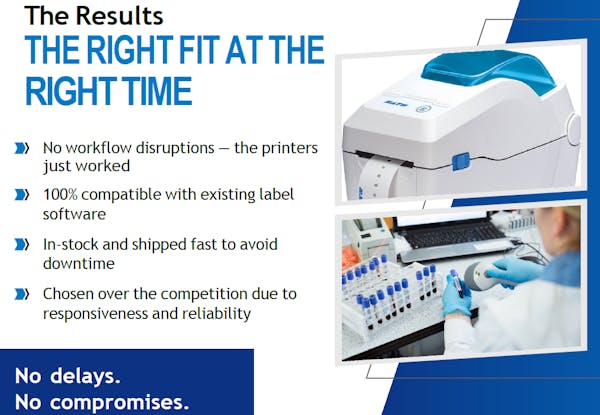
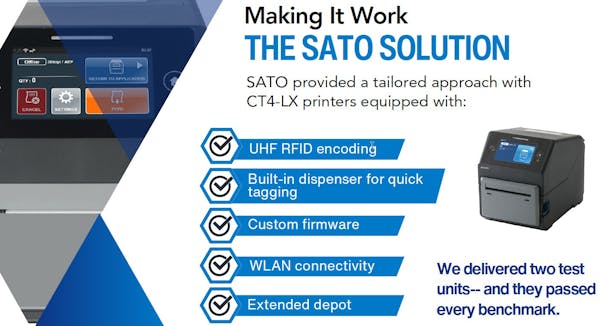
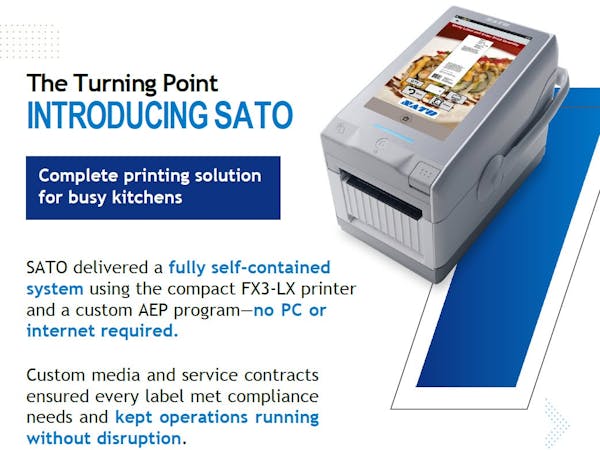
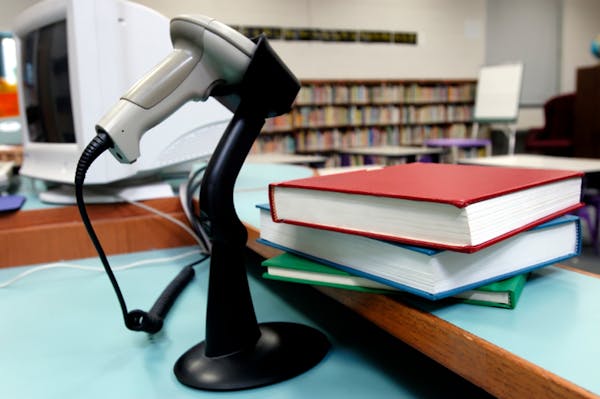
To resolve the issue, Farmington Community Library instituted an integrated radio frequency identification (RFID) tag and barcode system using a dozen printers from SATO America. Many industries use the two technologies to track products through production and equipment locations. The technological tools improve customer service and allow companies to expand while containing costs and employment levels.
"If employing new technology can change what the staff is required to do so that we can maintain or slightly increase staffing, than I have spent my money well. That's what we're looking at with this system," says Papai.
Halfway into the combined physical expansion and new library-automation project, Papai has already proven the truth of her belief in automation technologies. The growing library reduced checkout time at one of its branches by nearly 40% with the SATO-printed barcode labels integrated with the RFID system.