Why RFID Is More Efficient Than Barcodes for Global Inventory and Asset Tracking
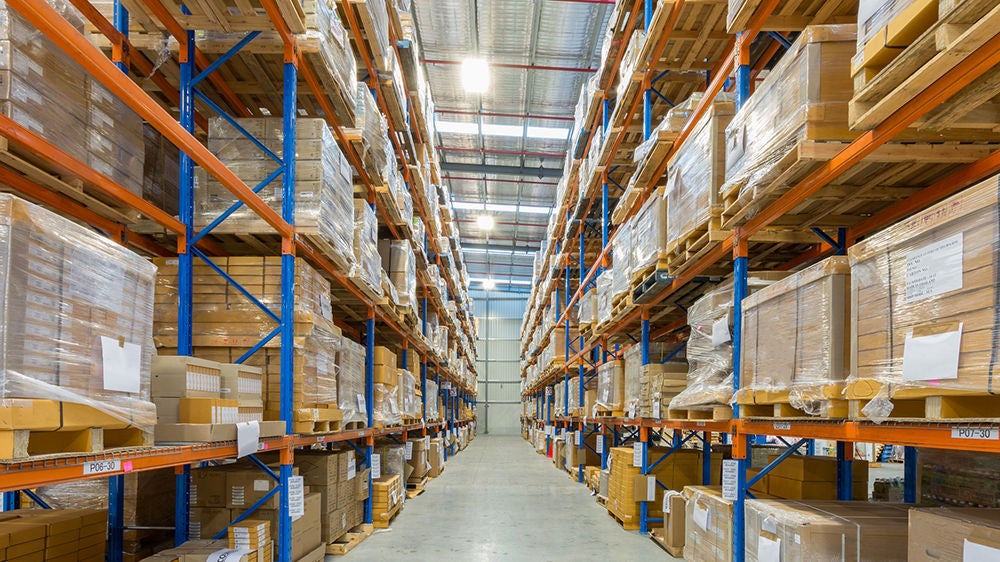
In global logistics, manufacturing, retail, and asset-intensive industries, choosing the right identification technology is critical for operational accuracy and efficiency. While barcodes have long been widely used, RFID (Radio Frequency Identification) offers significant advantages that make it a superior choice in many high-volume, fast-paced environments. Understanding the differences between the two technologies helps businesses choose the best solution for real-world tracking and management challenges.
What Are RFID and Barcodes?
Barcodes are printed patterns typically scanned visually by a handheld or fixed scanner. Each code must be in the scanner’s line of sight, and items must be individually aligned for accurate reading.
RFID, on the other hand, uses radio waves to communicate between a tag attached to an object and a reader. RFID tags can be read without line of sight and often in bulk, enabling faster and more automated workflows.
Key Advantages of RFID Over Barcodes
1. No Line-of-Sight Required
Barcodes must be oriented precisely and visible to the scanner, making scanning slow and labor-intensive—especially when items are stacked, packed in cartons, or located on high shelves.
RFID readers, however, can detect tags within range regardless of orientation or visibility. This means items can be read even inside boxes, on pallets, or among other tagged objects. This capability dramatically reduces handling time and speed limits associated with barcode scanning.
2. Bulk Reading for Speed
One of the most significant benefits of RFID is its ability to read multiple tags at once. While barcode systems require scanning each item individually, an RFID reader can capture hundreds of tags in seconds. This bulk reading capability transforms processes such as:
- Receiving and unloading shipments
- Cycle counting in warehouses
- Inventory audits
- Cross-docking operations
The result is a substantial reduction in labor and time compared to barcode scanning.
3. Higher Throughput and Reduced Labor
RFID supports continuous, automated identification, minimizing manual intervention. This enables operations such as:
- Automated checkpoints on conveyor lines
- Hands-free inventory counts
- Real-time movement logging
By reducing repetitive scanning tasks, RFID frees staff to focus on higher-value work and accelerates end-to-end workflows.
4. Improved Accuracy and Data Quality
Manual barcode scanning introduces the risk of human error—missed scans, incorrect scans, or skipped items. RFID significantly reduces these risks by capturing data automatically and consistently. As a result:
- Inventory records are more accurate
- Discrepancies between system data and physical stock are reduced
- Decision-making is based on reliable, up-to-date information
This high data fidelity is especially valuable for complex supply chains where inventory visibility is essential.
5. Enhanced Visibility and Traceability
RFID provides continuous tracking and logging as items pass through readers at key points—such as receiving docks, storage areas, and shipping zones. This enables real-time visibility into item location and movement history across operations. Barcodes, by contrast, only record events at discrete scanning points when manually triggered.
When Barcodes Still Make Sense
While RFID offers many advantages, barcode systems remain relevant in scenarios where:
- Low cost and simplicity are the primary requirements
- Processes involve low volumes and minimal movement
- There is limited need for automated or real-time tracking
In these cases, barcodes can still provide a cost-effective solution.
Choosing the Right Technology for Your Operation
Selecting between RFID and barcodes depends on operational goals, volume, environment, and budget. Considerations include:
- Volume of items and frequency of movement
- Need for real-time visibility versus periodic checks
- Labor costs associated with manual scanning
- Accuracy requirements for inventory and tracing
In high-throughput environments where accuracy and speed matter, RFID often delivers a stronger return on investment.
Conclusion
RFID surpasses barcodes in speed, automation, accuracy, and real-time visibility. Its ability to read multiple tags without line of sight and integrate seamlessly with modern inventory and asset management systems makes it a powerful solution for global operations. While barcodes still serve specific use cases, RFID is increasingly the technology of choice for organizations looking to optimize workflows, reduce costs, and gain deeper operational insight.